Magic Academy Haremlit
Where the school's wards are real, the students are dangerous, and the professor's cover story is paper-thin.
What is Magic Academy Haremlit?
Magic-academy fantasy is one of fantasy's most durable shapes — Hogwarts, Brakebills, the Scholomance, the Unseen University. The setting works because the academy is a structure: it has rules, ranks, ceremonies, and a fixed cast the protagonist has to navigate. Drop a haremlit protagonist into it and the structure becomes the engine. The hierarchy is the obstacle. The student body is the cast. The wards are the constraint that forces the protagonist to think.
What separates good magic-academy haremlit from generic dorm-romance fantasy is the institutional pressure. The faculty have agendas. The students have politics. The protagonist is performing a role that could fail at any time. The women he gathers aren't there because the genre says so — they're there because, in the institutional pressure of the academy, they've each decided he's worth backing.
Why It Works
The best of this corner — Andrew Rowe's Arcane Ascension on the SFF side, John Van Stry's grad-school-flavour haremlit — understands that the academy is a high-pressure ops environment with younger, more dangerous targets. Students cooperate when it suits them; faculty are bureaucrats with apex-predator combat ratings; nothing happens without consequences in three departments.
Where to Start in Alex Savage's Magic Academy Haremlit
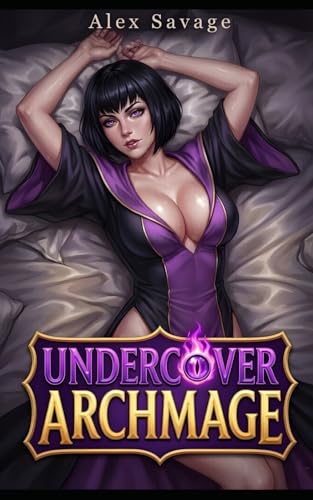
Undercover Archmage
The students think he's a master Battle Mage. He's really just a master of the 9mm.
Read More →Worth a Look
-
Arcane Ascension
Magic-as-engineering, academy structure, but a different relationship with the haremlit register.
-
Days of Future Past
Magic-academy haremlit with a confident veteran protagonist.
-
Brittle Souls
Action-leaning haremlit with a strong institutional setting.
-
Lust on the Rocks
Adjacent rather than identical — different setting, similar register.